
Issue 8: A Briefing on the Business of Education and Creative Thinking
Mapping the geography of independent school closures and the British landscapes that inspire us

ANALYSIS / Independent Schools
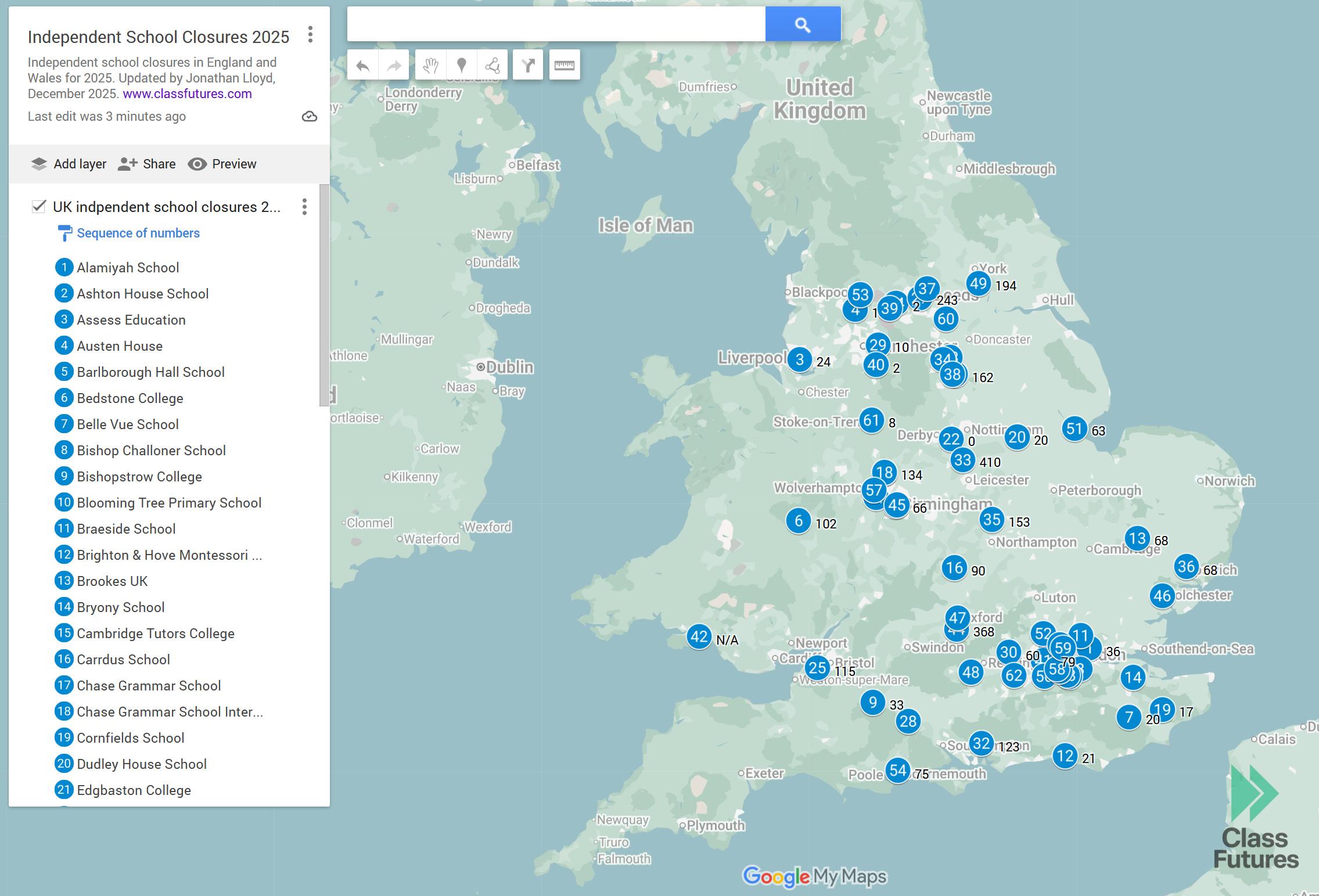
This week’s briefing builds on a recent LinkedIn post that mapped independent school closures using data from the Class Futures Intelligence project. The task itself was straightforward: taking a curated dataset, adding postcodes, and plotting it on Google My Maps. Having recently taught a Year 9 class about John Snow, I was curious to see whether any further patterns might sit behind the closures. It’s still a work in progress, but the initial response made clear how valuable this map is to those in the sector.
Special thanks to Kausor Amin-Ali, School Principal at Frontline International Private School in the UAE, who prompted an update using the latest Department for Education data. Incorporating the 2025 closures has helped build a clearer and more complete picture, shared here first. All schools included fall under the independent category, including independent special schools. Where relevant, I have removed cases where closures resulted from mergers or planned strategic partnerships - for example, Hereford Cathedral School. There were only six such entries.
Mapped: Independent School Closures 2025 (Updated)
Summary
The total number of closures recorded is 62. This excludes closures resulting from strategic partnerships, mergers, or inspection outcomes.
The average size among schools closing in 2025 was 108 pupils - often small schools, part of the cottage industry of independent education that serves towns and communities across England.
A future suggestion would be to track employee numbers - not only teaching staff but the wider workforce - an often overlooked aspect of a school closure.
Some pupil-roll data remains missing (for example, Oxbridge Online School, which is still included to represent online provision). I’ve also been unable to obtain data for a small number of schools in Wales, including Oakleigh House School, operated by Cognita Schools.
Observations
Building on the LinkedIn post, several patterns emerge:
Closures are geographically dispersed, affecting communities across the country rather than clustering in one region. The absence of entries in the South West and the North East is notable and may become clearer when combined with 2024 data. Hunter Hall, located in Penrith, has successfully raised £180,000 in a recent fundraising campaign to save the school. It has 80 pupils aged 3-11.
There is visible concentration around major urban centres, including London, the South East, Leeds, Birmingham, and the Midlands.
The impact on rural areas requires closer examination, particularly where small independent schools play a critical role in local provision.
Closures span the breadth of the sector, including independent special schools, prep schools, and colleges.
A central question follows: how will independent schools adapt heading into 2026?
One example is Loughborough Amherst School, which has partnered with MVA to create the Rosmini Hybrid Education Hub, moving to a hybrid model to sustain teaching provision. Pupils currently attend in person only one day a week, on Fridays.
Overall, this analysis highlights the importance of educational strategy, long-term thinking - economically, socially, culturally, and philosophically - and careful planning.
The independent school closures in England and Wales, 2025 can be viewed here. If you spot any issues, or have sector news to share for the next briefing, I’d welcome it.
ART / British Landscapes
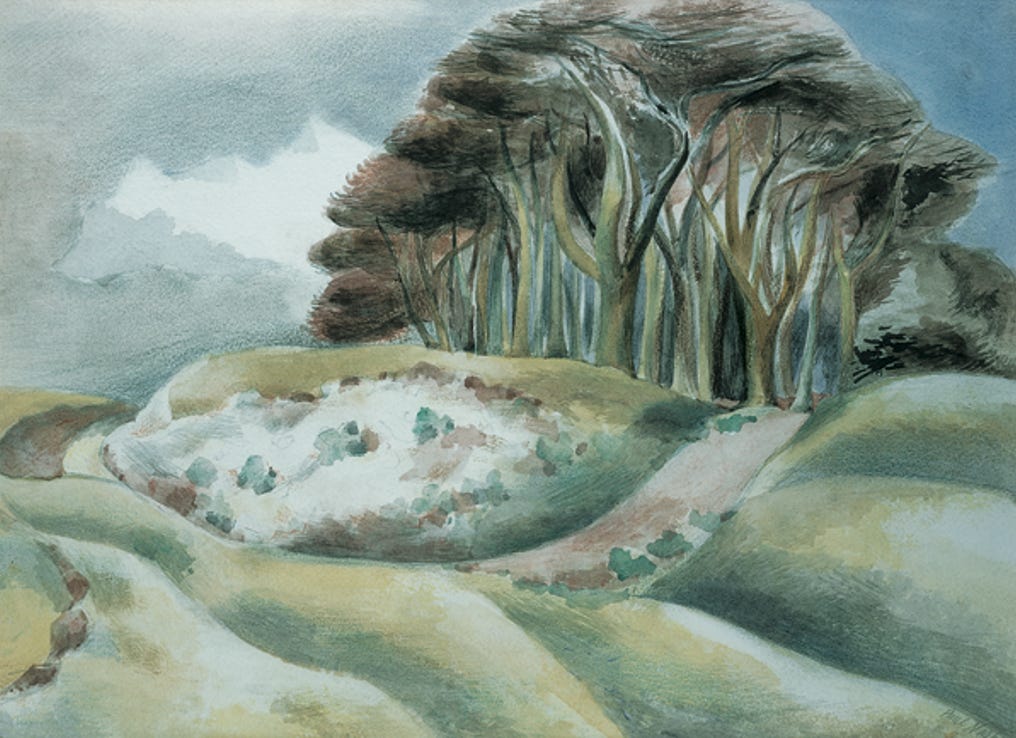
Looking ahead over the next two terms, I wanted to highlight a forthcoming exhibition at Pallant House Gallery in Chichester: British Landscapes: A Sense of Place.
As landscapes gain renewed cultural importance - particularly as society negotiates moments away from screens and automation - this exhibition feels especially timely.
Running 30 May – 1 November 2026, it brings the British landscape into focus through the work of twentieth-century artists like Paul Nash. Spanning 1910 to 1970, the exhibition traces how the countryside and coastlines of the British Isles were reimagined as expressions of cultural identity, creativity, and resilience.
Visitors are encouraged to pre-book tickets, which include full access to the house and the seasonal exhibition programme.
More information and booking: pallant.org.uk
“My business is to paint what I see, not what I know is there.”